Walnut kernel grading + gentle pressing + flavor preservation + gift bottle

Walnut cold press line for premium small-batch gourmet oil projects.

Walnut oil commands a 5–10× premium over commodity oils because of its delicate nutty flavor. That flavor survives only when the entire line — from kernel grading through gentle pressing to dark-glass bottling — is designed for preservation, not throughput.

This walnut project does not start with press tonnage. It starts with kernel grade, flavor chemistry, and the bottle presentation that justifies a gourmet price. Every module — from the grading table through temperature-controlled pressing to gift-carton packing — exists to protect the delicate nutty flavor that makes walnut oil worth 5–10× more than commodity edible oils.

  • Kernel grade and flavor preservation belong before any press discussion, because the 5–10× price premium exists only when the gourmet story is supported from kernel to bottle.
  • Polish filtration is treated as a flavor-preservation balancing act — remove haze without stripping the nutty character that justifies the premium.
  • Dark-glass filling, gift cartons, and short-run inventory management are treated as line modules, not packaging afterthoughts.

Fast inquiry

No need to read everything first; send these 4 points

Start walnut project brief
1Kernel grade, cleanliness, and moisture
2Low-temperature window and filtration target
3Small batches, bottle type, and packaging
4Samples, testing, or contract records
Walnut kernel selection and grading reference
Kernel grade decides the oil

Walnut kernel grade, freshness, and reserve selection — the gourmet line starts here

Walnut oil is a gourmet product with a price point 5–10× higher than commodity edible oils. That price is justified only when kernel grade, freshness, and storage discipline are visible from the first step. Starting with kernel reserve selection instead of press tonnage makes the premium logic clear.

See kernel selection
Gourmet flow
00:18

Hydraulic press motion used as the walnut gentle-press reference clip

Use this local workshop video as the press-cell reference until a dedicated walnut clip is added. The surrounding copy keeps the walnut focus on low heat, flavor, and batch quality.

Watch gourmet flow
Walnut oil cold-press cell reference
Gentle press cell

A small-batch cold-press cell where flavor preservation and batch repeatability come first

Walnut oil pressing is closer to artisan food production than to industrial oilseed processing. The press cell must maintain low temperature, gentle rhythm, and clean batch separation. Overheating destroys the delicate nutty flavor that justifies the premium price.

See pressing approach
Walnut oil dark glass bottle reference
Bottle presentation

Dark glass, polished clarity, and gift-market presentation for premium walnut oil

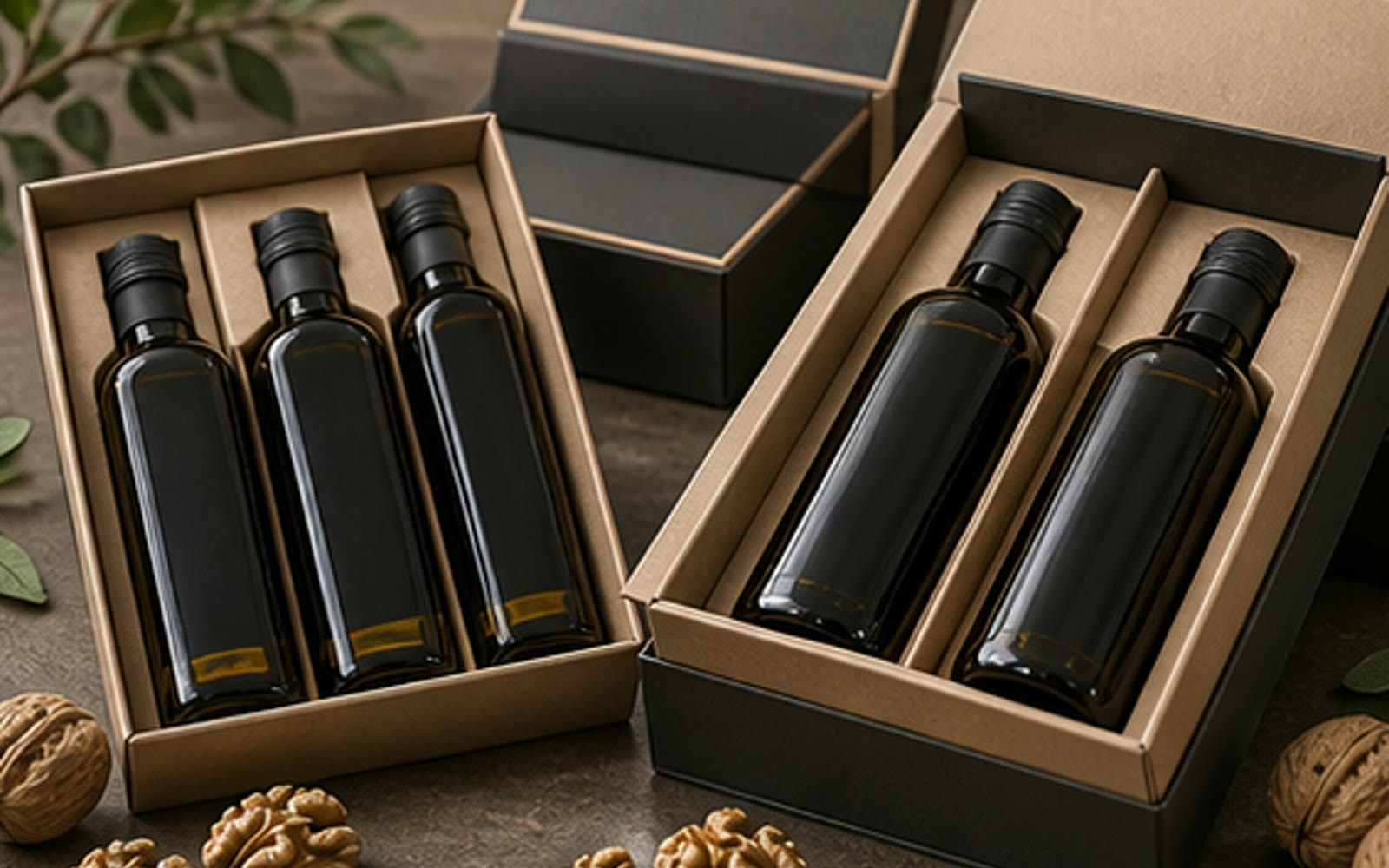
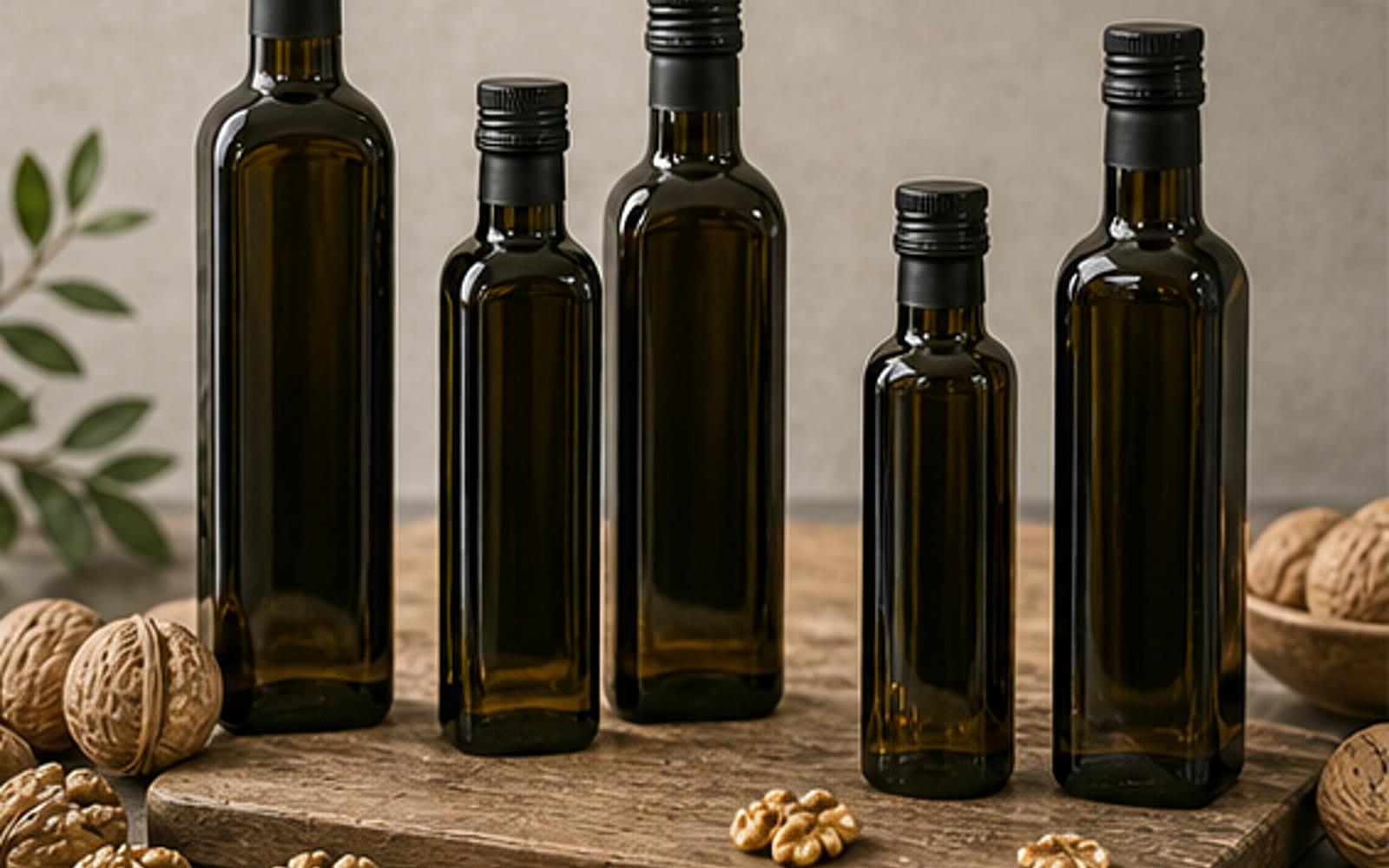
The finished bottle is the product. On walnut oil, the container, the clarity, the color, and the label are part of the value proposition — not an afterthought. Dark glass protects the delicate oil, polished clarity signals quality, and gift packaging justifies the retail price.

See bottle finish
Walnut Oil Press

From raw material to finished oil — design, manufacturing, installation, and technical support for small to large-scale oil plants. Qingzhou, Weifang, Shandong Province, China.

300-630 ton hydraulic lineup

Seven hydraulic models from 300–630 ton — hot (300/325) and cold (355–500 class) with 100 kg max feed per batch (see spec tables).

One-stop oil plant scope

Pressing, refining, dewaxing, filtration, filling, and supporting equipment — ODM supported for complete oil projects. Since 2008: 200+ staff, 1000+ customers served.

Project path

Three steps to judge scope, then send requirements

Real projects do not need a long directory first. Start with feed, route, and post-press handoff; after that, the factory can discuss scope directly.

1

Kernel grade and low-temp control

Confirm the feed starting point

Whole seed, kernels, screened feed, moisture, and impurities change pretreatment and press rhythm.

See feed prep
2

Small-batch pressing

Choose hot, cold, or product route

Route decides roasting, temperature, filtration, oil finish, and packaging before model comparison.

See route options
3

Bottle-ready finish

Send the project inputs to the factory

Output target, workshop, voltage, downstream handoff, and photos make sizing much faster.

Start walnut project brief

Photos and videos first

See equipment, workshop, and delivery before the details

If the full brief is not ready yet, these clips show barrels, pressing, cake discharge, workshop layout, larger models, and export delivery so the scope becomes easier to place.

Contact after viewing
Barrel and model
00:14

See the 300 / 325 / 355 barrel and model scale

Seeing the barrel, frame, and loading space makes capacity, shifts, and model selection easier to discuss.

Workshop
00:16

Workshop view for layout and operating side

Useful for checking footprint, access aisles, loading side, cake discharge, and filtration position.

Cake discharge
00:14

Cake discharge should be planned with oil handling

Bagging, bins, or crushing after discharge changes press-room flow and by-product value.

Capacity upgrade
00:14

500 model view before expansion or multi-press planning

When the project moves beyond trial batches, workshop height, lifting, loading, and filtration need to be checked together.

Export case
00:14

Export projects need voltage, packing, and delivery conditions

For export projects, voltage, crate packing, spare parts, installation mode, and destination port should be aligned early.

Delivery scene
00:14

Delivery depends on installation interfaces prepared early

Fast startup after arrival depends on power, foundation, lifting, and staffing being confirmed before shipment.

Walnut kernel selection and grading reference
Kernel grade decides the oil

Walnut kernel grade, freshness, and reserve selection — the gourmet line starts here

Walnut oil is a gourmet product with a price point 5–10× higher than commodity edible oils. That price is justified only when kernel grade, freshness, and storage discipline are visible from the first step. Starting with kernel reserve selection instead of press tonnage makes the premium logic clear.

See kernel selection
Gourmet flow
00:18

Hydraulic press motion used as the walnut gentle-press reference clip

Use this local workshop video as the press-cell reference until a dedicated walnut clip is added. The surrounding copy keeps the walnut focus on low heat, flavor, and batch quality.

Watch gourmet flow
Walnut oil cold-press cell reference
Gentle press cell

A small-batch cold-press cell where flavor preservation and batch repeatability come first

Walnut oil pressing is closer to artisan food production than to industrial oilseed processing. The press cell must maintain low temperature, gentle rhythm, and clean batch separation. Overheating destroys the delicate nutty flavor that justifies the premium price.

See pressing approach
Walnut oil dark glass bottle reference
Bottle presentation

Dark glass, polished clarity, and gift-market presentation for premium walnut oil

The finished bottle is the product. On walnut oil, the container, the clarity, the color, and the label are part of the value proposition — not an afterthought. Dark glass protects the delicate oil, polished clarity signals quality, and gift packaging justifies the retail price.

See bottle finish

Gourmet process

Walnut projects should open with kernel quality and flavor preservation, not press capacity

Walnut oil is one of the most expensive common edible oils because it carries a delicate, nutty flavor that disappears when processing is too aggressive. The entire line — from kernel grading through pressing temperature to polish filtration — exists to preserve that flavor. Once the discussion stays anchored in flavor preservation, the project logic becomes much clearer.

Compare walnut routes
Step 1

Grade the kernels: light halves, pieces, or mixed lots

Walnut kernel grade determines oil color, flavor intensity, and market value. Light halves produce the palest, mildest oil for gourmet retail. Darker pieces or mixed lots yield darker, stronger oil suited for cooking or ingredient use. The grade must be stated before any pressing discussion.

Step 2

Control pressing temperature to preserve the nutty flavor

The delicate flavor compounds in walnut oil are heat-sensitive. Pressing must keep exit oil temperature low enough to preserve them. This means smaller batches, lighter fills, and slower cycles — the opposite of maximizing throughput.

Step 3

Polish-filter for clarity without stripping flavor

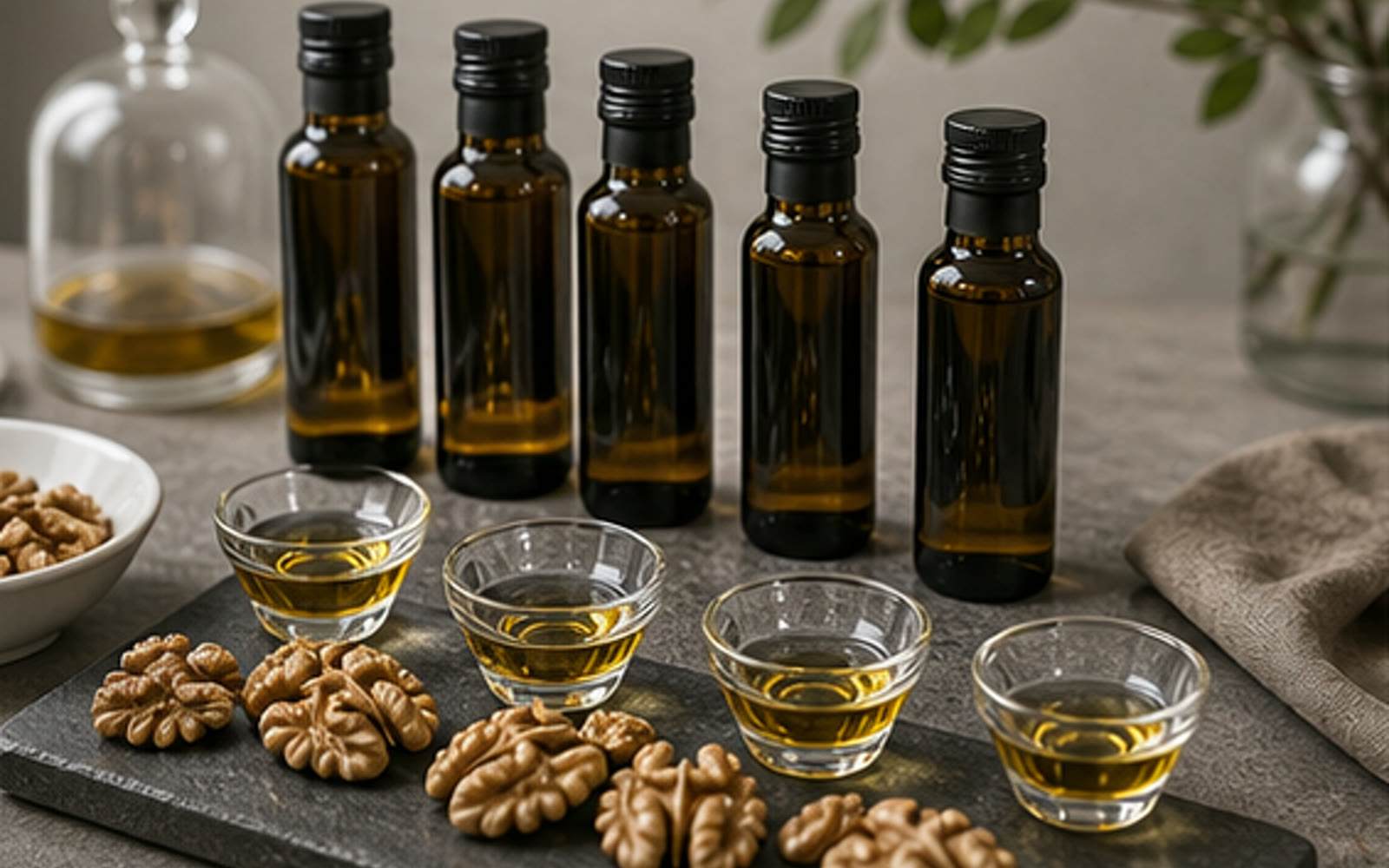
Walnut oil must be filtered to retail clarity but not over-filtered to the point of losing character. Polish filtration is a balancing act: remove particulates and haze while keeping the golden color and nutty aroma expected in gourmet channels.

Step 4

Package for protection and presentation simultaneously

Dark glass blocks UV that degrades walnut oil. Gift cartons and premium labels justify the retail price. Short filling runs keep inventory fresh. On walnut, packaging is not a post-project afterthought — it is part of the value chain.

60–65%
walnut kernel oil content
Among the highest of any tree nut. This high oil content makes hydraulic pressing efficient, but the value is in flavor — not yield.
5–10×
price premium over commodity oils
This premium exists only when kernel grade, pressing temperature, and bottle presentation all support the gourmet story.

Premium modules

Module choices for premium walnut oil: kernel prep, gentle pressing, and gift-pack finish

A walnut hydraulic line is a compact, quality-focused installation. It is not an industrial oilseed plant scaled down. The modules — kernel grading, temperature-controlled pressing, settling, polish filtration, dark-glass filling, and gift carton packing — must be designed for flavor preservation and batch traceability, not maximum throughput.

Review premium modules

Kernel grading and lot segregation

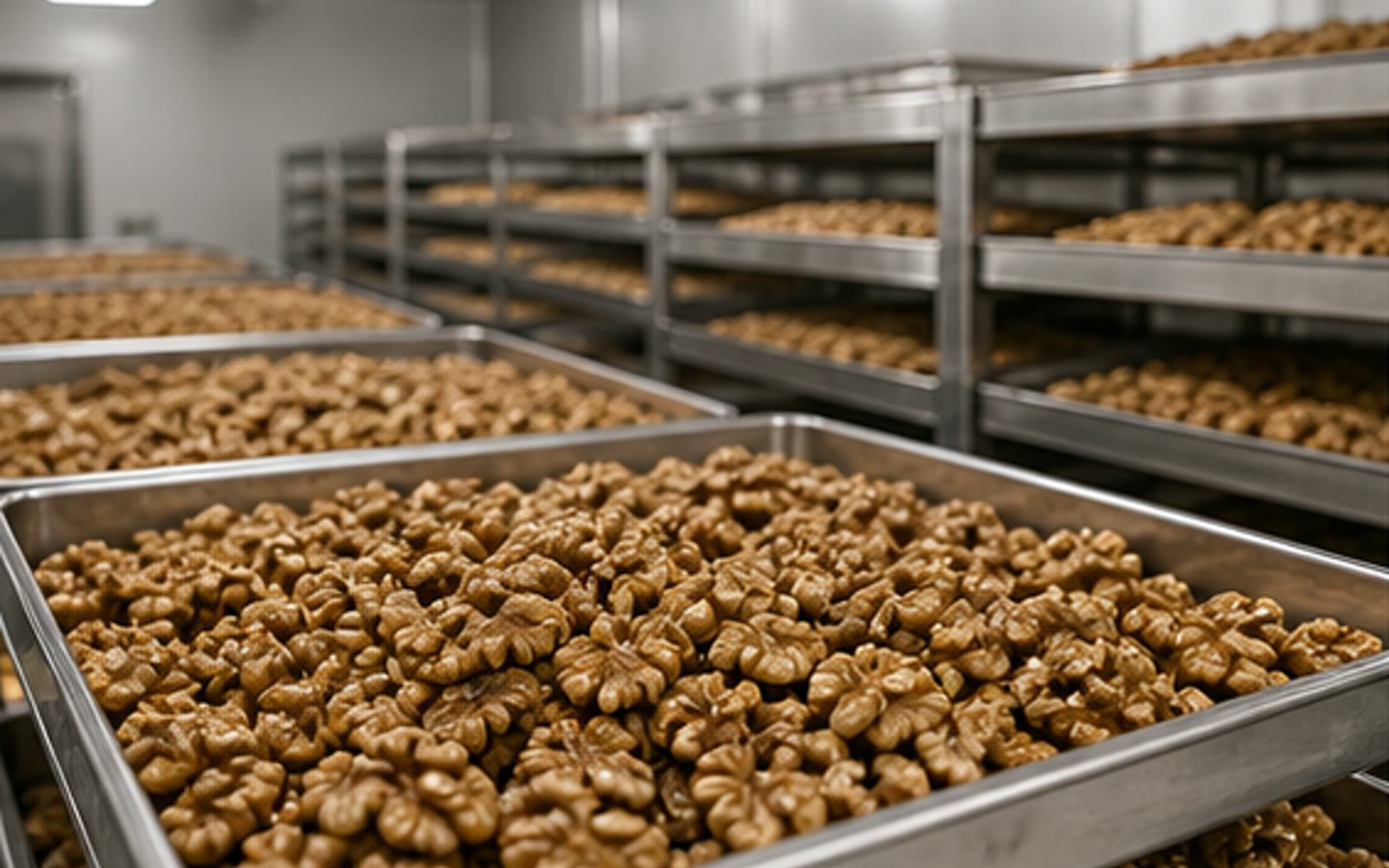
Light halves, amber halves, and broken pieces produce different oil grades. Mixing them without tracking creates inconsistent color and flavor. The grading station is the first quality module.

Temperature-controlled press cell

The press cell must be sized for gentle operation: lighter fills, slower cycles, and exit-temperature monitoring. Walnut oil flavor is lost to heat before it is lost to anything else.

Dark-glass filling and gift-carton packing

The filling and packing station is not an afterthought. On walnut oil, it determines the retail impression, the UV protection, the shelf freshness, and whether the product can enter gift or specialty channels.

  • State kernel grade, storage condition, and batch-change rhythm early — that reads more like a real premium project than tonnage alone.
  • Filtration should be defined by clarity and flavor expectations, not filed away as a downstream afterthought.
  • If the oil enters gift retail, dark glass, short-run filling, and pack-out buffers should be discussed together with the press.
  • Walnut lines win through batch control and finish quality, not by imitating commodity industrial plants.

Market lanes

Gourmet retail, gift-market batches, and contract pressing — three walnut business models

The same walnut press can serve three very different businesses. A gourmet food brand selling through specialty stores, a gift-market operation packaging seasonal sets, and a contract presser handling multiple client lots each need different finish standards, bottle formats, and batch rhythms.

Review buyer checklist

Gourmet food brand

Light-colored oil from premium kernel halves, polished to retail clarity, filled into dark glass with branded labels. The flavor story, origin narrative, and tasting notes are as important as the pressing parameters.

Gift-market seasonal operation

Holiday and festival gift sets with premium cartons, multiple bottle sizes, and seasonal production peaks. The line must handle short runs, fast changeovers, and pack-out coordination with the gift-box assembly area.

Contract premium pressing

Multiple brand owners share the pressing line with batch segregation, dedicated cleaning between lots, retained samples, and independent lab reports. Record-keeping and changeover discipline define the service quality.

  • Gourmet brands care most about flavor narrative, oil appearance, and dark-glass presentation.
  • Gift-market projects bring pack sizes, carton design, and seasonal shipping rhythm into the project scope.
  • Contract runs need earlier answers on changeovers, retained samples, and multi-label flexibility.
  • Explaining where the value comes from matters more than repeatedly talking about a 'walnut cold press machine.'

Project brief

A walnut brief should define kernel grade, finish quality, and packaging before discussing press models

Walnut projects are not defined by throughput. They are defined by kernel grade, flavor preservation, oil clarity, and the retail presentation that justifies the premium. A concise brief covering these inputs gets a better first quotation than a capacity-only request.

Open pre-pricing checklist
  • Describe walnut kernel grade, origin, storage condition, and whether batches change across sources.
  • Name the business clearly: gourmet edible oil, gift-pack route, or multi-brand contract production.
  • Keep clarity target, flavor expectation, bottle style, and carton format on the same brief.
  • State the batch size range and whether the line must handle multiple kernel grades or contract lots.
  • If you already have storage, filling, or packaging rooms, include photos and interface notes.
The strongest walnut inquiries name the kernel grade, the target market (gourmet, gift, or contract), and the bottle format upfront. That combination lets the factory design a line around flavor preservation and presentation — not just throughput.

Gentle press fit

Walnut uses the reference hydraulic family as a gentle pressing cell, not as a tonnage race

The hydraulic press family matters, but walnut oil should be written around kernel grade, flavor retention, polish filtration, dark-glass filling, and short-run stock control. The press model is selected after that premium product logic is clear.

Kernel grade before model grade

Broken kernels, old kernels, and fresh premium kernels should not be pressed under one loose walnut route.

Filtration cannot strip the nutty character

Walnut oil needs polish filtration for clarity, but the filter choice should preserve color and aroma instead of chasing a sterile-looking oil.

Gift-pack rhythm changes the line

Small bottles, dark glass, labels, cartons, and seasonal gift demand affect filling and packing more than press tonnage.

Small-batch line systems

Walnut oil buyers typically care about premium batch control rather than aggressive throughput. The better machine choice depends on kernel quality, filtration expectations, and how the final oil will be presented to gourmet buyers.

Shell cracking without kernel damage

Walnut shells are the hardest among common oilseeds (Mohs 3–4). Impact crackers must split the shell cleanly; roller crushers damage soft kernels. Shelling equipment choice affects oil color and rancidity risk.

Cold-press on 355–500 series (370–630 ton)

Walnut kernels are cold-pressed to preserve flavor and vitamin E. The 355/400/426/480/500 models provide 370–630 ton downforce; higher-pressure barrels reach 89 Pa/cm² for harder kernel preparations.

Oxidation-sensitive oil handling

Walnut oil is rich in polyunsaturated fatty acids (>60% linoleic + linolenic). Post-press oil must be transferred to nitrogen-blanketed tanks and filtered quickly. Shelf life is typically 6–12 months in dark glass.

Gourmet and cosmetic finishing routes

Gourmet walnut oil needs bright clarity and nutty aroma; cosmetic-grade needs consistent fatty-acid profile and low peroxide value. The downstream finish differs even though the press is the same.

Process and line path

Move from process to line scope and project preparation

Each section follows a practical project path so process notes, equipment scope, and project details stay connected.

Align the common questions first

Common project questions

These answers stay focused on low-temperature discipline, filtration cleanliness, and bottle-ready finish so the project does not collapse into equipment-only talk.

Which press model is recommended for walnut?
The walnut cold-press series (355/400/426/480/500, 370–630 ton) lists walnut as the #1 recommended oilseed. Each barrel holds up to 100 kg of crushed kernel; one barrel takes about 2 hours to press, and 2 barrels including loading take roughly 4.5 hours.
Why is walnut oil so expensive compared to other oils?
Walnut kernels are only 40–50% of whole-nut weight, the shelling process is delicate, and the oil oxidizes quickly. Cold-pressed walnut oil retails at 5–10× commodity oil prices because of raw material cost, low throughput, and short shelf life (6–12 months).
Can whole walnuts be fed into the press?
No. Shells must be cracked and separated first. Walnut shells are Mohs 3–4 hardness — pressing them with kernels would damage the press barrel, darken the oil, and produce off-flavors. Shell removal must reach 98%+ before feeding.
What should a walnut oil inquiry include?
Kernel grade (halves, pieces, or broken), moisture content, whether shelling is in-scope, target market (gourmet food vs. cosmetic), daily batch count, filtration clarity target, and whether nitrogen-blanketed storage or dark-glass bottling is planned.
Why should walnut oil be pressed gently?
Walnut oil sells on delicate nutty aroma. Excess heat, rough transfer, or over-filtration can flatten the flavor that makes the product premium.
What does kernel grade change in a walnut oil line?
Kernel grade changes oil color, flavor, cake value, and filtration load. Separate grades should be handled as separate production lanes when the product price justifies it.
When should dark-glass bottling be planned with the press?
If the oil is sold as gourmet retail or gift packs, bottle size, dark glass, label application, carton rhythm, and seasonal demand should be designed with the press cell.
Ready to size a line for your oilseed?

Share kernel grade, low-temperature target, filtration standard, and packaging direction so the line can be sized like a premium small-batch project.