Most walnut projects don't fail at the press — they fail between cracking the shell and the first nitrogen tank
Walnut kernels carry 60-70% oil, the highest of any common seed, so yield per barrel is rarely the problem. The real risks sit upstream and downstream: shell cracking without crushing the kernel, removing rancid pieces, pressing at ambient temperature, and filtering into a nitrogen-blanketed tank before the oil oxidizes. This guide walks the full walnut line on real parameters.
A walnut hydraulic oil press process guide built on real numbers: kernel oil 60-70%, kernel recovery 40-50% of nut weight, 98%+ shell removal, ambient cold press on 355-500 (370-630 ton), 100 kg/barrel ~2 h, residual oil <=5%, N2-blanketed storage, 6-12 month shelf life.
60–70% oil content — the richest common oilseed
Walnut kernels contain more oil than almost any other seed. High oil content means excellent yield per batch but also faster rancidity: oxidation begins within hours of cracking the shell if kernels are exposed to heat or light.
Cold-press #1 on the walnut oil line team product page
The main-site cold-press page (355/400/426/480/500 series, 370–630 ton) lists walnut first among recommended oilseeds. Each barrel holds up to 100 kg crushed kernel; pressing takes ~2 h per barrel, 4.5 h for 2 barrels including loading.
Shell–kernel ratio drives upstream cost
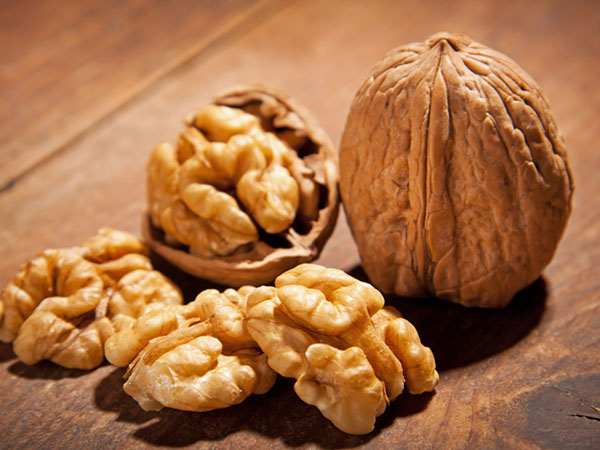
Walnut shells are extremely hard; kernel recovery is 40–50% of whole-nut weight. Cracking without crushing the kernel requires careful equipment. Shelling quality directly affects oil color, flavor, and press feed consistency.
Gourmet + cosmetic dual-market potential
Cold-pressed walnut oil retails at 5–10× the price of commodity oils. It serves both gourmet cooking (high smoke point, nutty flavor) and cosmetic/skincare channels (vitamin E, linoleic acid). The downstream route should be decided before pressing.
Pick the finish route before the machine — here's the quick read
Walnut oil is almost always cold-pressed at ambient temperature to protect flavor and vitamin E. The decision that actually changes the line is the finish route: gourmet bottle, cosmetic bulk, or contract processing. Choose the lane first.
Gourmet bottled brand -> dark glass + N2
Cold-press at ambient on the 355-500 series (370-630 ton). Filter within minutes, transfer to N2-blanketed stainless tanks, fill 250-500 ml dark glass with nitrogen headspace. Oil sells at 5-10x commodity prices on clarity, aroma, and color consistency.
Cosmetic-grade oil -> peroxide control
Same ambient cold press, but the finish targets a consistent fatty-acid profile and low peroxide value (<=5 meq/kg) with batch-traceable documentation for cosmetic registration. Filled into sealed drums rather than retail bottles.
Still have whole nuts? -> crack first
Shells are Mohs 3-4 hard and kernel recovery is only 40-50% of nut weight. Hydraulic pressing works only on shelled kernels at 98%+ shell removal. If you start from whole nuts, cracking and shell separation must be in scope.
The walnut line from whole nut to nitrogen-protected oil
- 01
1 . Crack shells and recover kernels
Impact crackers split hard shells (Mohs 3-4) without crushing the soft kernel inside. Aspirators and vibrating screens separate fragments to 98%+ shell removal. Kernel recovery is 40-50% of whole-nut weight; residual shell darkens oil and wears the barrel.
- 02
2 . Grade kernels and remove rancid pieces
Sort halves, quarters, and broken pieces. Remove rancid, mold-stained, or darkened kernels — even 2-3% bad material can ruin a premium batch. Set moisture to 3-5% and keep kernels cool until pressing.
- 03
3 . Cold-press at ambient temperature
No pre-heating. Crushed kernels are loaded into a cold-press barrel on the 355-500 series (370-630 ton). Ambient pressing preserves the delicate nutty flavor and the >60% polyunsaturated fatty acids that define walnut oil.
- 04
4 . Load the barrel by a fixed rule
Each barrel holds up to 100 kg crushed kernel; one cycle takes about 2 h, and two barrels including loading and cake discharge take ~4.5 h. A higher-pressure 89 Pa/cm2 barrel option suits drier or harder kernel preparations. Residual oil in cake <=5%.
- 05
5 . Filter immediately and blanket with nitrogen
Walnut oil is >60% polyunsaturated and oxidizes within hours of air exposure. Plate-and-frame or bag filtration should happen within minutes of pressing; filtered oil goes straight into N2-blanketed stainless tanks. Shelf life in dark glass is 6-12 months refrigerated.
Real walnut numbers to size the line
Every figure below comes from the walnut production spec, not a generic catalog. Use them to sanity-check any quote.
Mistakes the press gets blamed for — but that belong upstream or downstream
- Crushing kernels during cracking: roller crushers damage the soft kernel and darken the oil. Impact cracking plus aspiration to 98%+ shell removal is not optional.
- Skipping kernel grading: even 2-3% rancid or mold-stained pieces ruin a premium batch, and no filter removes the off-flavor afterward.
- Letting pressed oil sit in air: walnut oil is >60% polyunsaturated and oxidizes within hours. Without prompt filtration and N2 blanketing, peroxide value climbs before bottling.
- Sizing only the press: cracking, grading, filtration, and nitrogen storage must match the ~2 h/barrel rhythm, or the press waits on a bottleneck elsewhere.
Strong shell-cracking, kernel grading, and oxidation control remove most arguments about machine size that are really feedstock or handling problems.
Why a hydraulic press suits walnut oil — and what stays constant across the range
Walnut kernels are soft, high-oil (60-70%) seeds that give up their oil readily under steady pressure, which is exactly what a hydraulic press delivers: a slow, even squeeze at ambient temperature instead of the high-shear heat of a screw press. That gentleness is the whole point on walnut, because the delicate nutty flavor and the >60% polyunsaturated fatty acids that justify a 5-10x retail premium are destroyed by heat long before yield is affected. Walnut sits at the top of the cold-press product page and runs on the 355-500 series (370-630 ton). Across that range the hydraulic system is the same: 60 MPa system pressure driven by a 2.2 kW motor, mechanical high- and low-pressure relief valves rather than solenoids, carbon-steel partition plates between cakes, and twin pressure gauges whose needles should always read together. What changes between models is frame strength and pressure stability, not the core hydraulics — which is why a heavier 370-630 ton frame is matched to the higher mechanical stress of the slow cold cycle so it holds true over years of use. A correctly sized press keeps its frame straight, holds pressure steady, presses residual oil down to <=5% in the cake, and lasts longer, and those four things actually decide cost per liter of premium oil. Because walnut runs cold and the value lives in flavor and clarity, model choice follows the finish route and batch rhythm — roughly 2 h per 100 kg barrel — never the other way around. Oversizing wastes capital on a product that wins through batch control rather than scale.
What to confirm before scoping Walnut Oil Press Process Guide: Cold-Press Route, Kernel Recovery, and Real Parameters
Walnut Oil Press Process Guide: Cold-Press Route, Kernel Recovery, and Real Parameters should not be quoted from an equipment name alone. Check feed lots, target oil, post-press handling, and packing rhythm in one scope before deciding which Walnut Oil Press modules stay. Factory cold-press page lists this oilseed — prioritize 355–500 (370–630 ton), pure press ~2 h/barrel.
When feed condition, moisture, impurities, batch weight, and product position are unclear, press tonnage and filter area become guesswork. Factory systems share 60 MPa and 2.2 kW motors; hot pure press is 30–40 min/barrel and cold pure press is ~2 h/barrel — cycle time matters more than brochure tonnage.
- Confirm whether feed is whole seed, kernels, pretreated material, or an existing semi-finished stream.
- Confirm whether the target is crude oil, filtered oil, bottled oil, drum ingredient oil, or a refining handoff.
- Hot cycle reference: pure press 30-40 min/barrel, ~1.5 h for 2 barrels with loading; cold pure press ~2 h/barrel, ~4.5 h for 2 barrels.
- Confirm batch rhythm, labor, changeover, retained samples, power (often 380V/50Hz/3ph), and site install conditions.
Match hot / cold models to factory hard data
When discussing Walnut Oil Press Process Guide: Cold-Press Route, Kernel Recovery, and Real Parameters, pin models to published factory specs — not tonnage alone.
Hot 300/325: 300–325 ton, 60 MPa system, standard barrel Ø390×800 mm / max 100 kg, pure press 30–40 min/barrel, ~1.5 h for 2 barrels with loading, 2.2 kW motor. Cold 355/400/426/480/500: 370–630 ton, integrated frame, same 100 kg standard barrel, pure press ~2 h/barrel, ~4.5 h for 2 barrels with loading; optional Ø300 high-pressure barrel max 60 kg. Residual oil target ~≤5% (peanut hot often 6–8% measured).
- Standard barrel Ø390×800 mm, max ~100 kg crushed feed; optional Ø300 high-pressure barrel max ~60 kg.
- Cylinder material 27SiMn; cold frames are integrated molded steel; hot frames are typically H-type channel steel.
- Factory cold-press page lists this oilseed — prioritize 355–500 (370–630 ton), pure press ~2 h/barrel.
project scope needs to land in equipment interfaces
After Walnut Oil Press Process Guide: Cold-Press Route, Kernel Recovery, and Real Parameters is clear, write the interfaces: how preparation feeds the press, how oil leaves the press, how filtration connects to tanks, and how packing receives finished oil.
Front-end input
Record feed form, daily volume, moisture, and sorting needs so pretreatment is not left to operators.
Clarity filtration and gift packs
High polyunsaturates: filter quickly, N₂ tanks, dark glass; shelf life often 6–12 months refrigerated.
Delivery data
Prepare space, power (often 380V/50Hz/3ph), labor, target package, local rules, and acceptance method before quotation.
Clear these up first
Yes. Whole walnut shells are Mohs 3-4 hard and contain no oil; pressing them would damage the barrel, darken the oil, and create off-flavors. Shells must be cracked and separated to 98%+ removal first. Kernel recovery is only 40-50% of whole-nut weight, so shelling scope strongly affects upstream cost.
These next pages move the discussion forward
Buying guides
Hydraulic vs Screw Oil Press for walnut: Which Fits Your Mill?
Compare hydraulic batch press vs continuous screw (expeller) for walnut: oil quality, cold-press ability, capacity, residual oil, labor, and when each route wins. Use this before you request a quote.
Continue →Buying guides
walnut Hydraulic Press Capacity: Barrels per Shift and How Many Presses
Size walnut hydraulic capacity with real cycles: hot pure press 30-40 min/barrel (~1.5 h for 2 barrels with loading); cold ~2 h pure / ~4.5 h for 2 barrels. Example math for 1–5 t/day small mills.
Continue →Buying guides
walnut Oil Press Inquiry Checklist: Data That Gets a Real Quote
RFQ checklist for walnut hydraulic oil press projects: seed form, kg/shift, hot/cold, filtration, cake path, power, country, and photos. Incomplete inquiries get catalog replies — complete packs get model counts and line scope.
Continue →Send this page's requirement to the factory
Bring kernel grade, target output, and site constraints, and we will continue from what this page covers.